
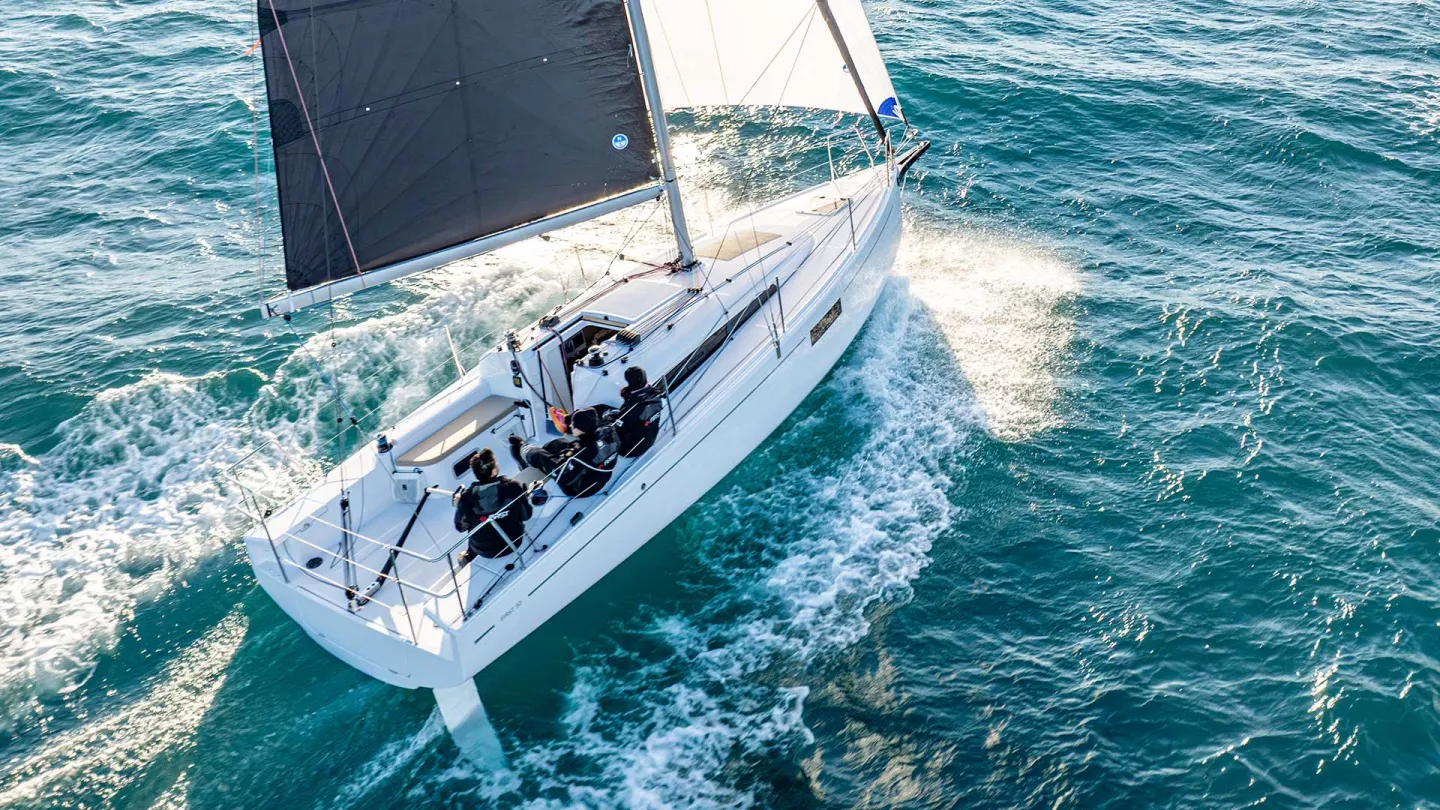
The sailing world welcomed a groundbreaking addition in January 2025 with the launch of the Beneteau First 30, a sailboat that redefines the intersection of performance and cruising comfort. Crafted through a collaboration between Beneteau and Seascape, with naval architecture by Samuel Manuard and styling by Lorenzo Argento, this 30-foot monohull introduces the concept of a "planing cruiser." It blends the exhilaration of high-speed sailing—typically reserved for racing yachts—with the practicality and comfort needed for family cruising or shorthanded adventures.
Built in Slovenia using advanced vacuum-infusion techniques, the First 30 is lightweight, agile, and designed to appeal to both novice sailors and seasoned racers. This article explores the boat’s design, history, technical specifications, performance, features, and its place in the modern sailing landscape, offering a comprehensive look at why it’s a standout in 2025’s sailboat releases.
A Legacy Reimagined
The First 30 name carries significant weight in Beneteau’s history. The original First 30, launched in 1977, was a game-changer, designed by André Mauric as a fast, competitive cruiser-racer that dominated regattas while offering practical cruising amenities. It became an icon, spawning a legacy of performance-oriented sailboats under the First banner.
The 2025 iteration pays homage to this heritage but reimagines the concept for a new era, leveraging Seascape’s expertise in lightweight, high-performance designs. Seascape, acquired by Beneteau in 2018, brings a minimalist, performance-driven ethos, seen in their earlier models like the Seascape 24 and 27, which influenced the First 30’s DNA.
The goal was to create a boat that delivers the thrill of planing—where the hull lifts onto its own bow wave, reducing drag and boosting speed—without sacrificing the comforts expected of a cruiser. This balance makes the First 30 unique, targeting a broad audience: young families seeking an entry-level sailboat, couples wanting spirited coastal adventures, and club racers looking for a versatile platform.
Design and Construction
The First 30’s design is a masterclass in blending form and function. Its hull is optimized for planing, featuring a flat, wide stern and a chined profile that enhances stability and lift. The lightweight construction, at just 3,150 kg (6,945 lbs), is achieved through vacuum-infused GRP with vinyl ester resin, incorporating a fully cored hull and deck for strength without excess weight.
Twin rudders provide precise control, especially at high speeds or when heeled, while a single fin keel (standard 1.98 m draft) balances performance and accessibility. An optional shallow-draft keel is available for coastal cruising in shoal waters.
The deck layout is clean and uncluttered, prioritizing ease of handling. All lines are led aft to the cockpit, where optional electric winches simplify sail adjustments for solo or shorthanded crews. The cockpit itself is spacious, with removable benches that transform the area for racing or lounging. A retractable bowsprit facilitates the use of asymmetric spinnakers, boosting downwind performance.
Below deck, the First 30 defies its compact size with a surprisingly spacious and functional interior. The layout includes two double cabins (one forward, one aft), a U-shaped galley, a compact but fully equipped head with a shower, and a convertible saloon dinette that doubles as an additional berth. Large hull windows and deck hatches flood the interior with natural light, creating an airy feel.
Technical Specifications
| Dimension | Specification |
|---|---|
| Length Overall (LOA) | 10.33 m (33’11") |
| Hull Length | 9.35 m (30’8") |
| Beam | 2.95 m (9’8") |
| Light Displacement | 3,150 kg (6,945 lbs) |
| Draft (Standard Keel) | 1.98 m (6’6") |
| Draft (Shallow Keel) | 1.50 m (4’11") |
| Performance & Capacity | Specification |
|---|---|
| Ballast | 1,070 kg (2,360 lbs) |
| Upwind Sail Area | 58 m² (624 sq ft) |
| Mainsail Area | 32 m² (344 sq ft) |
| Jib Area (Self-Tacking) | 26 m² (280 sq ft) |
| Asymmetric Spinnaker | 80 m² (861 sq ft) |
| Engine | Yanmar 15 HP diesel |
The fractional rig, with a square-top mainsail and no backstay, maximizes sail efficiency while keeping rigging loads low, making sail handling straightforward. The self-tacking jib is standard, ideal for shorthanded sailing, with options for a larger genoa for racing. The optional electric propulsion system aligns with Beneteau’s push toward sustainability, offering quiet, low-emission motoring.
Performance and Handling
The First 30’s defining feature is its ability to plane, achieving double-digit speeds in moderate winds (15-20 knots). Its sail area-to-displacement (SA/D) ratio of approximately 25 places it firmly in the high-performance category, rivaling some dedicated racing boats. Testers report that the boat feels lively yet stable, with the twin rudders providing excellent grip even when pushed hard.
Under sail, the First 30 excels in a variety of scenarios. In light winds (5-10 knots), it maintains respectable speeds of 5-6 knots upwind, thanks to its efficient hull shape and low drag. In stronger breezes, it can hit 10-12 knots on a reach, with planing kicking in as the hull lifts. Downwind, the optional asymmetric spinnaker pushes speeds even higher, making it a thrill for club racers or spirited cruisers.
Motoring performance is equally impressive. The standard 15 HP Yanmar diesel delivers 6-7 knots at cruising RPM, with low fuel consumption for efficient harbor maneuvers or long passages. The optional electric motor offers similar performance with zero emissions, though range is limited to battery capacity (typically 20-30 nautical miles).
Features and Innovations
The First 30 is packed with thoughtful features that enhance its versatility:
The interior, while compact, is cleverly designed for liveaboard comfort. The galley includes a two-burner stove, sink, and fridge, sufficient for weekend trips or longer coastal cruises. The head’s shower is a rarity in this size class, adding a touch of luxury. Ventilation is excellent, with multiple hatches and fans to keep air flowing in warm climates.
Market Position and Reception
Priced at approximately €150,000 (ex VAT), the First 30 is positioned as a premium entry-level sailboat, competing with models like the J/99, Dehler 30od, and Jeanneau Sun Fast 30 OD. Its unique selling point is the planing capability combined with cruising amenities, setting it apart from pure racers or traditional cruisers.
The boat has garnered significant attention, earning nominations for the British Yachting Awards 2025 and Yacht Style Awards 2025. Early reviews praise its balance of fun and practicality, with Sailing World noting, "The First 30 delivers the rush of a racer with the comfort of a cruiser, making it a game-changer for its size."
Owners appreciate the boat’s versatility. It’s equally at home in a local regatta, a weekend family getaway, or a coastal passage. The shorthanded design appeals to couples or small crews, while the robust construction and offshore certification make it suitable for ambitious sailors planning longer voyages.
Drawbacks and Considerations
No boat is without compromises. The First 30’s compact interior, while well-designed, may feel cramped for extended liveaboard use, especially compared to larger cruisers like the Beneteau Oceanis 34.1. The water and fuel capacities (80 L and 40 L, respectively) are modest, limiting range for long passages without careful planning.
The planing hull, while thrilling, demands active helming in strong winds to maintain control, which may challenge novice sailors. Finally, the base price can climb with options like electric propulsion, advanced electronics, or racing sails, potentially pushing it above €200,000 fully equipped.
Boats on the Market Verdict
The Beneteau First 30 is a triumph of innovation, blending the thrill of planing performance with the practicality of a modern cruiser. Its lightweight construction, shorthanded design, and sustainable options make it a forward-thinking choice for 2025.
Ideal Owner Profile
Whether you’re a club racer chasing trophies, a couple seeking spirited coastal adventures, or a family dipping into sailing, the First 30 delivers an unmatched combination of speed, ease, and comfort. It particularly appeals to those looking for an entry into performance sailing without sacrificing the amenities needed for comfortable cruising.
Competitive Analysis
When compared to competitors in the 30-foot performance cruiser segment, the First 30 distinguishes itself through its genuine planing capability, innovative modular cockpit, and the pedigree of its design team. While some competitors may offer more interior volume or lower pricing, none deliver the same exhilarating sailing experience combined with practical cruising features.
The Bottom Line:
As a nominee for major industry awards and a favorite among testers, the Beneteau First 30 is poised to become a modern classic, carrying the First legacy into a new era of sailing. It represents one of the most compelling options in its class for sailors who value performance but refuse to compromise on comfort and practicality.